Karnataka’s Five Layer Farming Revolution: Case Studies, Success Stories & Sustainable Agriculture Insights
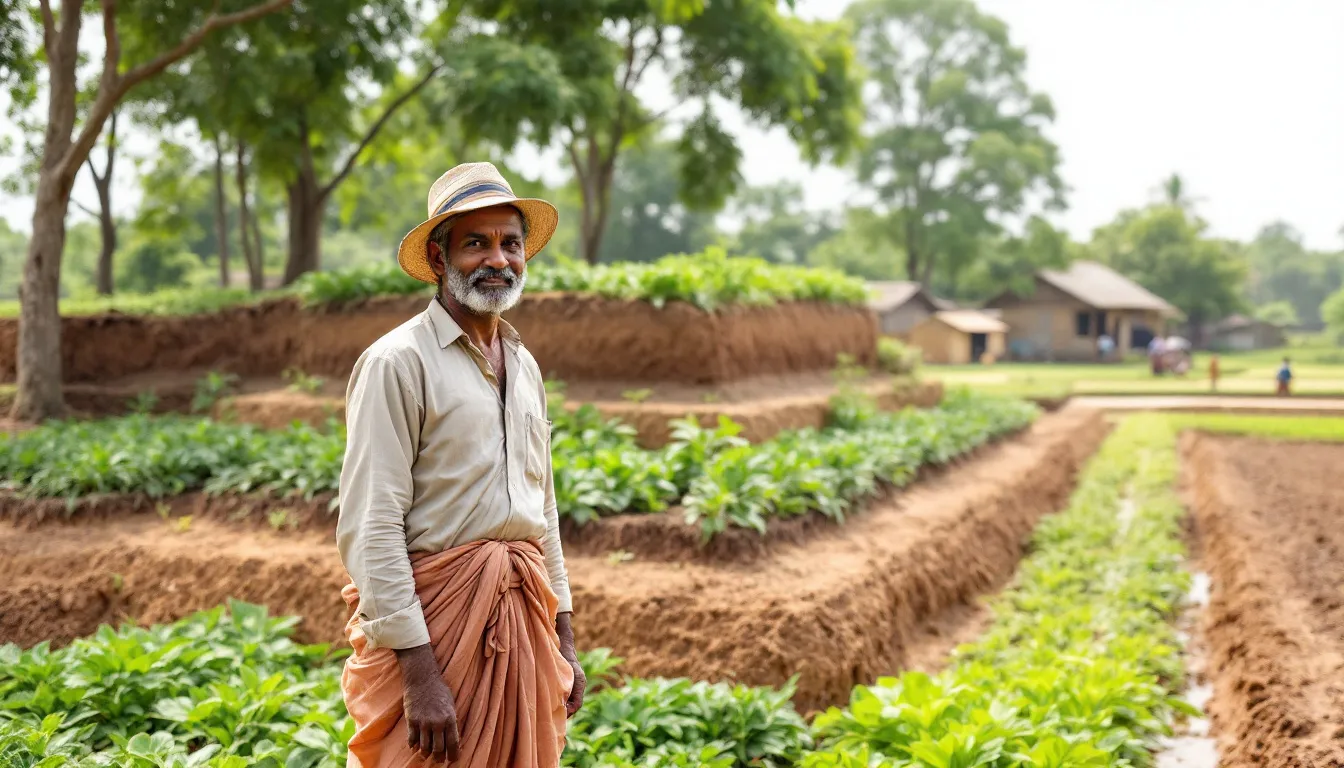
Introduction to Sustainable Farming Practices in Karnataka
Sustainable farming is not just a trend—it’s a necessity for food security in India. Over the past few decades, Karnataka has emerged as a leading state embracing eco-friendly agriculture, especially with innovations like five layer farming. This approach addresses land degradation, excessive chemical use, and water scarcity—issues often linked to the Green Revolution’s legacy.
Unlike monocropping, which depletes soil fertility, five layer farming integrates multiple crop species in five distinct layers to mimic natural forest ecosystems. These layers typically include:
-
Tall tree crops (e.g., coconut, arecanut)
-
Medium-height fruit trees (e.g., papaya, banana)
-
Shrubs (e.g., coffee, cacao)
-
Herbaceous vegetables (e.g., spinach, okra)
-
Ground cover crops (e.g., sweet potato, legumes)
This approach optimizes vertical space, improves resource use efficiency, and promotes biodiversity—ensuring that farmers earn income year-round.
Fact: According to ICAR Research Studies, multi-layer farming systems can increase per-acre income by up to 300% compared to monocropping in semi-arid regions like Karnataka.
Case Studies and Success Stories of Five Layer Farming in Karnataka
Real-world applications show that five layer farming is more than a theory—it’s a proven income booster for farmers.
Case Study 1 – Shivamogga District
A farmer group in Shivamogga replaced their paddy monocrop with a five layer model including arecanut, banana, pepper, brinjal, and cowpea. Within two years, their net profit increased by 250%, and water usage dropped by 40%.
Key Results:
-
Crop diversification reduced market dependency.
-
Organic pest control reduced pesticide costs.
-
Year-round harvesting ensured continuous cash flow.
Case Study 2 – Mandya Organic Cluster
Women-led farmer producer organizations (FPOs) adopted five layer farming with added vermicomposting units. They reported:
-
Higher soil organic matter (from 0.8% to 2.1% in 3 years).
-
40% more vegetable yield without chemical fertilizers.
-
Creation of local organic vegetable markets.
Quote from a farmer:
“Earlier, farming meant waiting for one harvest season. Now, every month brings a new crop and a new source of income.”
Comparison Table – Monocropping vs Five Layer Farming
|
Parameter |
Monocropping |
Five Layer Farming |
|---|---|---|
|
Water Usage |
High |
30–50% less |
|
Income Sources |
1–2 per year |
Multiple, year-round |
|
Soil Health |
Declining |
Improving |
|
Pest Management |
High chemical use |
Natural predators & trap crops |
|
Biodiversity |
Low |
High |
The Green Revolution in Karnataka’s Agriculture
The Green Revolution of the 1960s and 70s transformed India’s agricultural output, including in Karnataka, by introducing high-yield varieties (HYVs), chemical fertilizers, and irrigation systems. While it boosted food production, it also caused:
-
Soil degradation due to excessive fertilizer use.
-
Water table depletion from over-irrigation.
-
Loss of crop diversity in favor of HYVs.
Five layer farming has emerged as a corrective measure, restoring ecological balance while maintaining high yields. Farmers who were once dependent on chemical-intensive monocropping are now transitioning to low-input, high-output agroforestry systems.
Research Insight: A National Institute of Agricultural Economics & Policy Research study found that integrated farming systems in Karnataka can improve net returns by 50–80% compared to conventional methods.
How Five Layer Farming Improves Food Security
Food security is not just about growing more food, but about growing diverse, nutritious, and resilient crops. Five layer farming contributes by:
-
Increasing diversity – Multiple food crops reduce dependency on a single commodity.
-
Ensuring continuous harvest – Different layers have different growth cycles.
-
Reducing risks – If one crop fails due to pests or market crash, others sustain income.
-
Improving nutrition – Families consume more vegetables, fruits, and pulses.
Challenges and Solutions in Adopting Five Layer Farming
While promising, five layer farming adoption faces certain hurdles:
Challenges
-
Initial setup costs for planting multiple crop layers.
-
Knowledge gap among farmers about layer compatibility.
-
Market linkage issues for surplus produce.
Solutions
-
Government subsidies and FPO support to reduce initial investment.
-
Training programs through Krishi Vigyan Kendras for crop planning.
-
Development of local farm-to-market networks.
Future of Five Layer Farming in Karnataka

Looking ahead, five layer farming could become the centerpiece of Karnataka’s sustainable agriculture policy. With climate change threatening traditional farming patterns, resilient models like this are crucial.
Key Development Goals:
-
Scaling through farmer cooperatives.
-
Integration with drip irrigation and solar-powered pumps.
-
Incorporating value-added processing units at the village level.
Government Support: The Karnataka State Department of Agriculture has already initiated pilot programs to bring five layer farming to more than 10,000 smallholder farmers by 2027.
Conclusion
Karnataka’s five layer farming revolution shows that sustainable farming is both profitable and environmentally sound. By learning from case studies, success stories, and ongoing research, farmers can continue to grow more with less, protect resources, and make agriculture resilient for decades to come.
Internal Links:
External Links:
-
Krishi Vigyan Kendra (KVK)