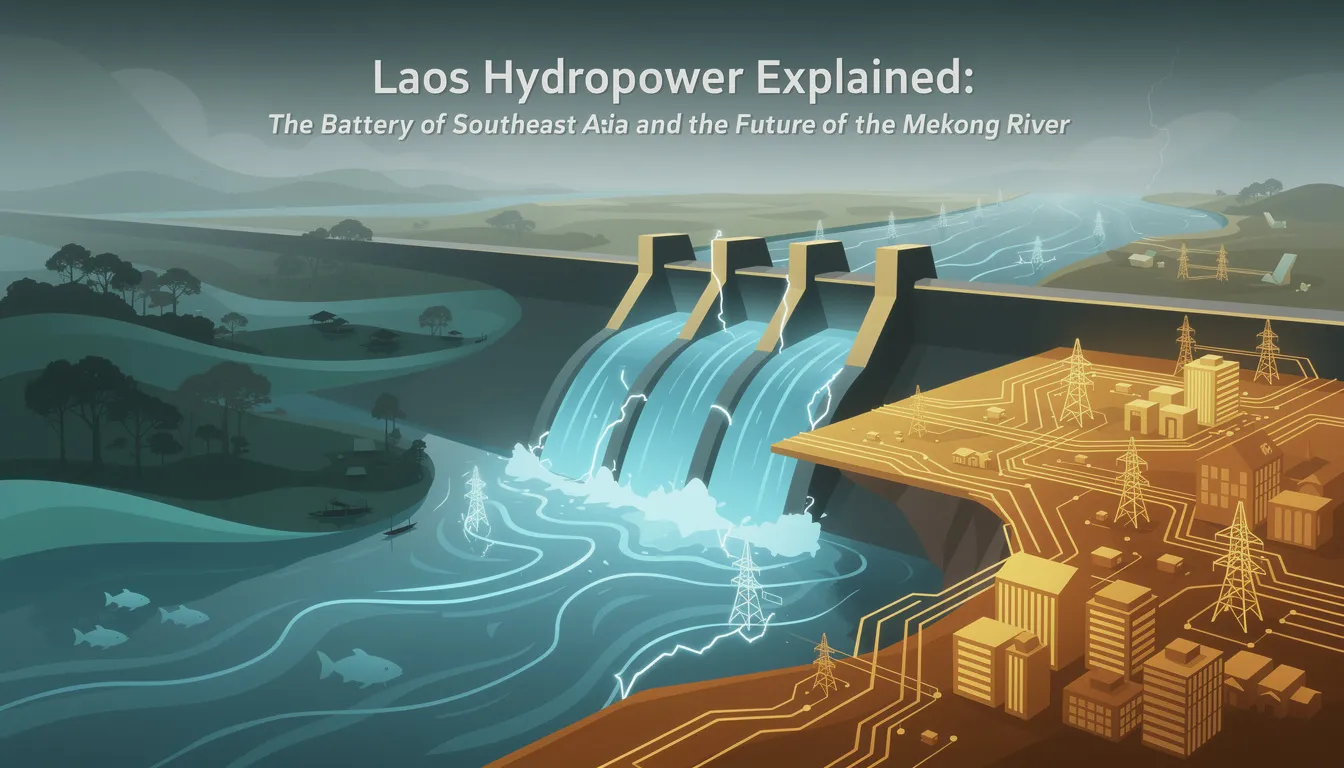
This research analyzes the geopolitics of renewable energy in Southeast Asia, focusing on hydropower development in the region.
The study uses the concept of Renewable Energy Geopolitics to map geographic and technical features of renewable energy systems, including hydropower dams and the Mekong River system.
Laos, also referred to as the Lao People’s Democratic Republic (Laos PDR), known as the “Battery of Southeast Asia,” leverages competitive market conditions to attract investment in water-based energy, promoting sustainable hydropower development and energy cooperation. The Laotian government has adopted an export-oriented strategy, aiming to position the country as a key regional energy exporter.
The country aims to develop its full hydropower potential, targeting over 14 GW hydropower capacity by 2025, and increase power exports to neighboring countries, including Thailand, Vietnam, and Cambodia. Laos plans to export 15,000 MW by 2030, with around 80 percent of generated power sold to neighboring countries, accounting for 30 percent of the country’s exports by value.
Laos’ heavy borrowing for dam construction leads to significant debt levels projected at $1.3 billion annually through 2026.
The research highlights the importance of international cooperation, including the role of the Mekong River Commission and the International Hydropower Association, in promoting sustainable hydropower development and addressing environmental concerns. China plays a significant role in regional hydropower investments and upstream dam operations, affecting regional water and energy security.
Hydropower is seen as a cleaner alternative to fossil fuels, supporting the region’s net-zero emissions goal, and the economics and environment of hydropower will shape the expected future of the Mekong River and Southeast Asia.
Introduction to Renewable Energy
-
Renewable energy is a crucial component of South East Asia’s energy mix, with hydropower being a significant contributor to the region’s energy demand.
-
The Laos government has set ambitious targets for renewable energy development, aiming to increase the share of renewable energy in the country’s energy mix to 30% by 2025. The Lao People’s Democratic Republic (Laos PDR) is officially pursuing an export-driven hydropower strategy to become the “Battery of Southeast Asia.”
-
Hydropower development is a key aspect of the country’s renewable energy strategy, with a focus on sustainable hydropower development and minimizing environmental impacts. As of 2019, Laos had an installed hydropower capacity of about 7,213 MW, producing approximately 24,204 GWh per year.
-
The region’s renewable energy landscape is characterized by a mix of hydropower, solar, and wind energy, with a growing focus on energy storage and transmission. Laos plans to increase its hydropower capacity to over 14 GW by 2025 and aims to export 15,000 MW by 2030.
-
International organizations, such as the World Bank, are supporting renewable energy development in the region, including the development of large dams and hydropower projects. Around 80 percent of the power generated in Laos is sold to neighboring countries, accounting for 30 percent of the country’s exports by value.
The economics of hydropower are central to regional development, as South East Asia’s energy demand is increasing rapidly, making hydropower a cheap and stable source of renewable energy compared to fossil fuels. Hydropower is seen as a cleaner alternative to fossil fuels, helping the region move towards a net-zero emissions goal, and these trends are expected to continue as South East Asia’s energy needs grow.
Hydroelectric Power Generation
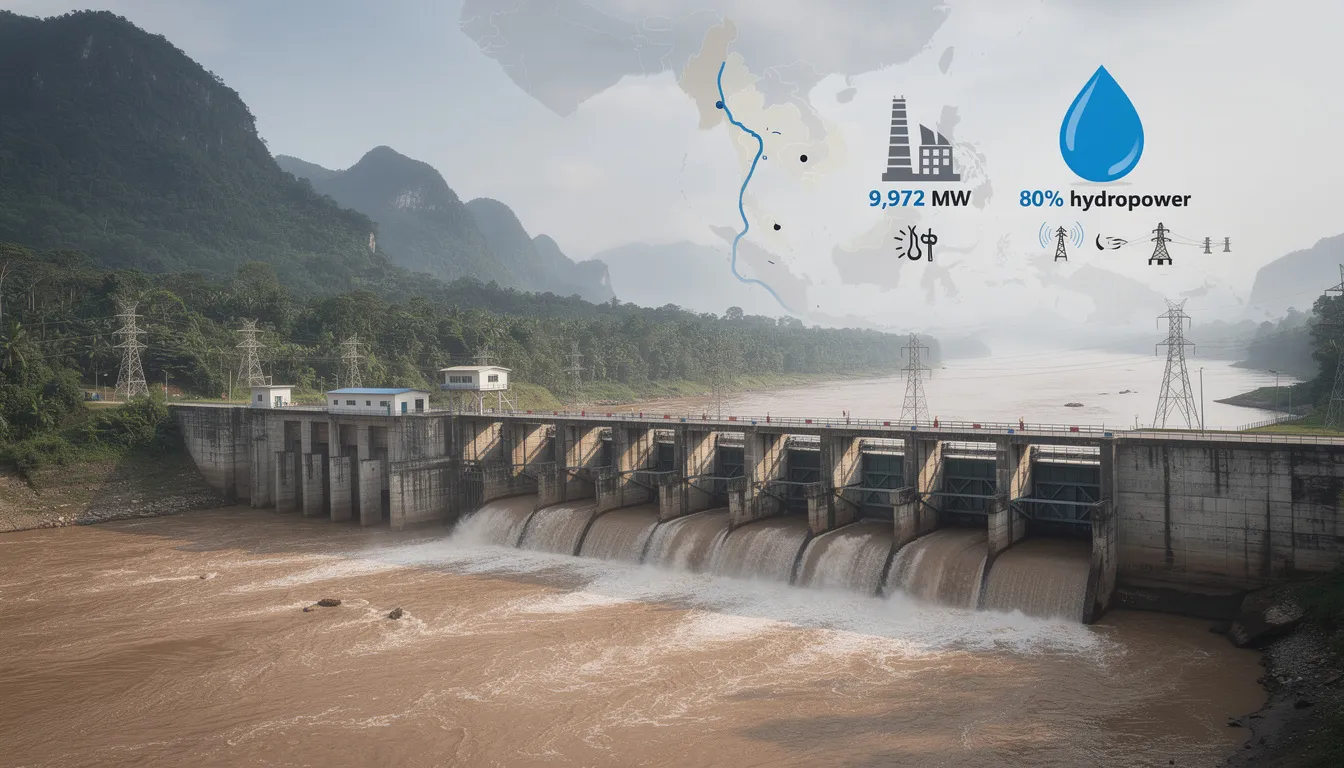
Hydroelectric power generation is a significant contributor to Southeast Asia’s energy mix, with the Mekong River system being a key source of hydropower generation, especially for Laos PDR. As of the end of 2019, Laos had an installed power generation capacity of nearly 9,972 MW, with over 80 percent contributed by hydropower.
The Lower Mekong Basin has the potential to generate 30,000 MW of electricity through hydropower dams, with 88 new dams planned for the region by 2030. The Xayaburi hydropower plant, with a capacity of 1,295 MW, was commissioned in 2019 and is a significant contributor to Laos’s hydropower capacity.
Hydropower dams, such as the Xayaburi dam, are being developed to support economic growth and energy demand in the region. In 2019, Laos added 1.89 GW of hydro capacity, making it the third highest globally after China and Brazil. Laos currently exports about 4.5 GW of power, which is expected to grow to 14-15 GW in the near future, and exports about 4,260 MW of power to Thailand, set to grow to 9,000 MW. Laos has nearly 33 cross-border electricity interconnections with Thailand, Cambodia, Vietnam, China, and Myanmar, and currently imports about 60 MW of power from China. Laos started power exports to Singapore in 2022 and completed building transmission infrastructure for selling electricity to Cambodia in 2023. The Lao government has signed multiple agreements with Thailand and Vietnam to enhance power trade and increase electricity exports. The government also plans to develop a 500 kV backbone transmission line project to meet its power export targets.
The development of hydropower dams is subject to environmental and social concerns, including the impact on fisheries and agriculture in the Mekong Delta. Laos’ reliance on hydropower exports makes its economy vulnerable to fluctuations in external markets and climate change. Laos has a hydropower potential of about 26 GW, of which one-third has been utilized so far. The Lao PDR’s development strategy is based on the Least-Cost Optimization scenario in the ASEAN Energy Outlook to provide abundant, cheap, and stable electricity to neighboring countries. Laos plans to develop all hydropower potential as far as practical for export and provide electricity throughout the country. The total generation in Laos is expected to be around 82,733 GWh by 2025, with hydropower being a major contributor. Laos signed an agreement with Cambodia in 1999 to trade up to 300 MW of power, with plans to increase this to 200 MW by 2021.
Sustainable hydropower development is critical to minimizing environmental impacts and ensuring the long-term viability of hydropower generation in the region. International studies support regional energy development and cross-border collaborations in the Mekong region. China plays a significant role in upstream dam operations and has a major impact on regional water and energy security. Looking to the future, hydropower generation in Laos is expected to grow, with increasing exports and deeper regional integration shaping the energy landscape of Southeast Asia.
Regional Energy Market
The regional energy market in South East Asia is characterized by a growing demand for energy, driven by economic growth and urbanization. This demand is expected to rise rapidly, making hydropower a cheap and stable source of renewable energy compared to fossil fuels. The economics of regional energy trade and cooperation among nations in the ASEAN region are central to meeting these needs, as cross-border infrastructure projects and energy exports drive regional growth strategies. The ASEAN Power Grid is promoted as a way to continue economic growth while reaching net-zero emission goals. The future of regional energy integration will see an expected increase in cross-border electricity exports, with Laos playing a key role as a regional energy exporter. International studies support regional energy development and cross-border collaborations, highlighting the importance of shared infrastructure and policy alignment. Hanoi is a key location in Vietnam’s energy infrastructure, and modernization of its grid is needed to support larger regional power integration efforts. China exerts significant influence in regional hydropower investments and upstream dam operations, affecting water and energy security for downstream nations. Laos is expected to graduate from its least developed country status in 2026, partly due to its hydropower export strategy. However, the continued expansion of hydropower has severe environmental and socioeconomic consequences for the 60 million people living in the Lower Mekong Basin. The hydropower strategy enables Laos to generate significant electricity for regional export but severely disrupts the Mekong ecosystem.
The region’s energy market is dominated by fossil fuels, but there is a growing focus on renewable energy, including hydropower, solar, and wind energy.
The development of a regional power grid is critical to supporting the growth of renewable energy in the region, including the integration of hydropower generation into the grid.
International cooperation, including the ASEAN Power Grid, is supporting the development of a regional energy market, including the promotion of energy cooperation and trade.
The region’s energy market is subject to challenges, including energy poverty and inequality, which must be addressed through sustainable energy development and energy access programs.
Environmental Considerations
-
Environmental considerations are critical to sustainable hydropower development in Southeast Asia, especially as the environment plays a central role in regional energy development and cooperation among nations.
-
The development of hydropower dams can have significant negative environmental and social implications for the Mekong River and its dependent populations. The Mekong hosts the world’s largest inland fishery, which is highly dependent on fish migration patterns that are blocked by dams. The hydropower strategy enables Laos to generate significant electricity for regional export but severely disrupts the Mekong ecosystem. The Mekong Delta is experiencing accelerated erosion and subsidence due to reduced sediment flow from damming. Dams alter the river’s natural flood pulse, causing unseasonable flooding and droughts, which disrupt the life cycles of fish. Fish stocks in the Mekong are predicted to decline by up to 41% due to blocked migration routes caused by dam construction. Dams trap vital sediment, leading to reduced soil fertility and increased riverbank erosion in the Mekong Delta. The continued expansion of hydropower has severe environmental and socioeconomic consequences for the 60 million people living in the Lower Mekong Basin. Hydropower facilities disrupt normal high-low water cycles, leading to unexpected droughts and floods in the Mekong Delta. The construction of large dams in the Mekong Basin is expected to reduce fish production by up to 70 percent, impacting food security for millions. More than 60 million people rely on fisheries from the Mekong Basin, which are threatened by hydropower development. The Mekong River Commission has warned that the costs and benefits of hydropower dams are likely to be distributed inequitably among stakeholders. Hydropower development in the Mekong region is linked to increased poverty and malnutrition due to its impact on local fisheries and agriculture. The dams’ construction leads to the forced relocation of local communities, disrupting their livelihoods and social structures. Nations in the region must collaborate to address these environmental and social challenges.
-
The Mekong River Commission is working to promote sustainable hydropower development and minimize environmental impacts, including the development of environmental impact assessments and sustainability guidelines.
-
International organizations, such as the International Hydropower Association, are supporting sustainable hydropower development and promoting best practices in environmental management.
-
The region’s environmental considerations must be balanced with economic development and energy demand, requiring a nuanced approach to sustainable hydropower development.
Energy Storage and Transmission
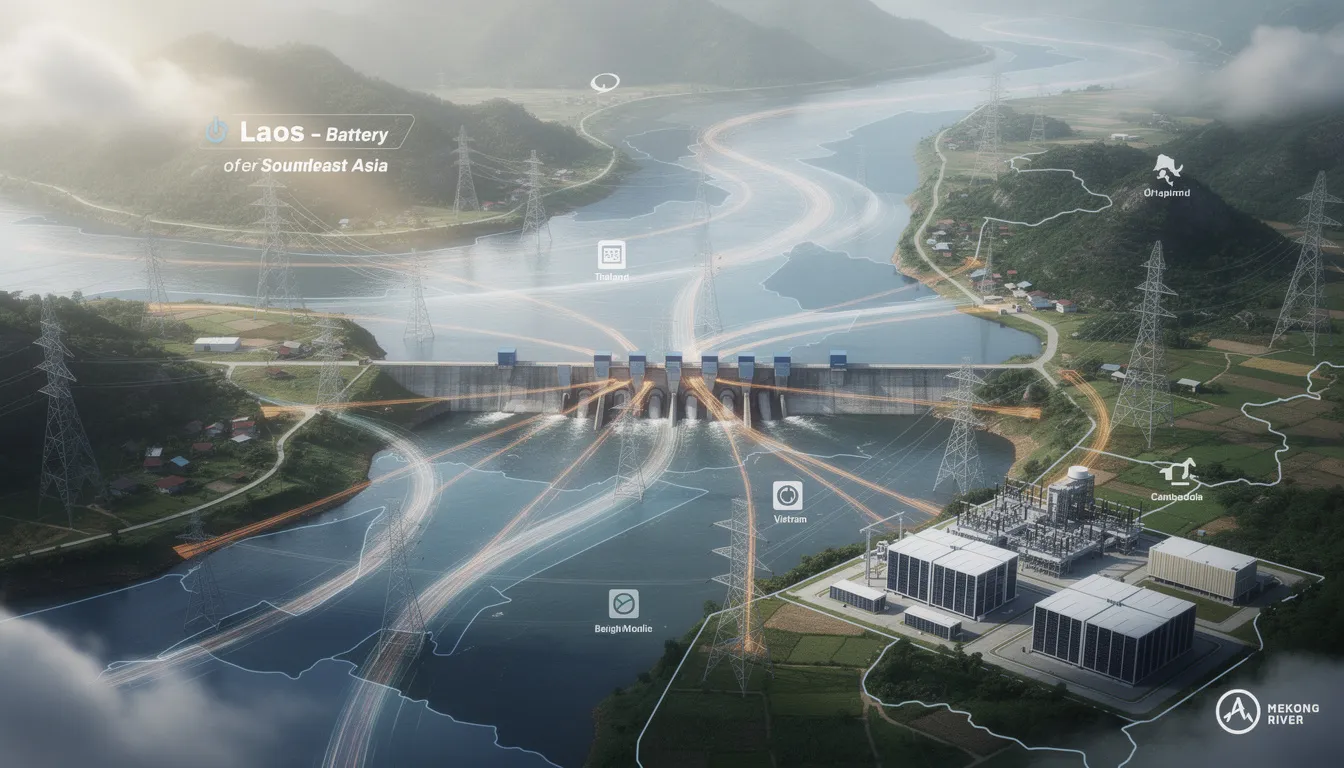
The advancement of energy storage and transmission infrastructure is becoming increasingly vital for the effective distribution of renewable energy across Southeast Asia, particularly within the Mekong River Basin. As Laos continues to position itself as the “Battery of Southeast Asia,” the country’s hydropower development strategy is closely tied to the construction of large hydropower dams and the expansion of a robust power grid that connects neighboring countries. This cross-border energy cooperation is essential for meeting the region’s rising energy demand and supporting economic growth.
Organizations such as the International Hydropower Association and the Mekong River Commission play a pivotal role in facilitating dialogue and setting standards for sustainable hydropower development. Their efforts help ensure that the expansion of hydroelectric power in the Lower Mekong Basin aligns with best practices in environmental management and regional energy planning.
Despite the region’s significant hydropower potential—estimated at over 30,000 MW in the Lower Mekong Basin—transmitting and distributing this electricity efficiently remains a challenge. The construction of large dams on the Mekong River and its tributaries must be carefully managed to address concerns related to fisheries, agriculture, and the livelihoods of millions who depend on the river system. The Laos government, in collaboration with international partners such as the World Bank, is working to implement sustainable hydropower practices and ensure that prior consultation with affected communities is a standard part of project development.
Recent progress in energy storage technologies, including advanced battery systems and pumped storage hydroelectricity, is helping to stabilize the regional power grid. These innovations are crucial for integrating variable renewable energy sources and ensuring a reliable electricity supply throughout Southeast Asia. As the ASEAN region targets a 23% renewable energy mix by 2025, investment in modern energy storage and transmission infrastructure will be key to achieving these ambitious goals.
Careful planning and management are required to balance the benefits of hydropower development with the need to protect the Mekong River Basin’s unique ecosystems and communities. The Mekong River Commission’s guidelines for environmental impact assessments and mitigation measures are instrumental in guiding responsible development. By prioritizing sustainable hydropower and regional energy cooperation, Southeast Asia can harness its renewable energy resources to drive economic growth while minimizing environmental and social impacts.